
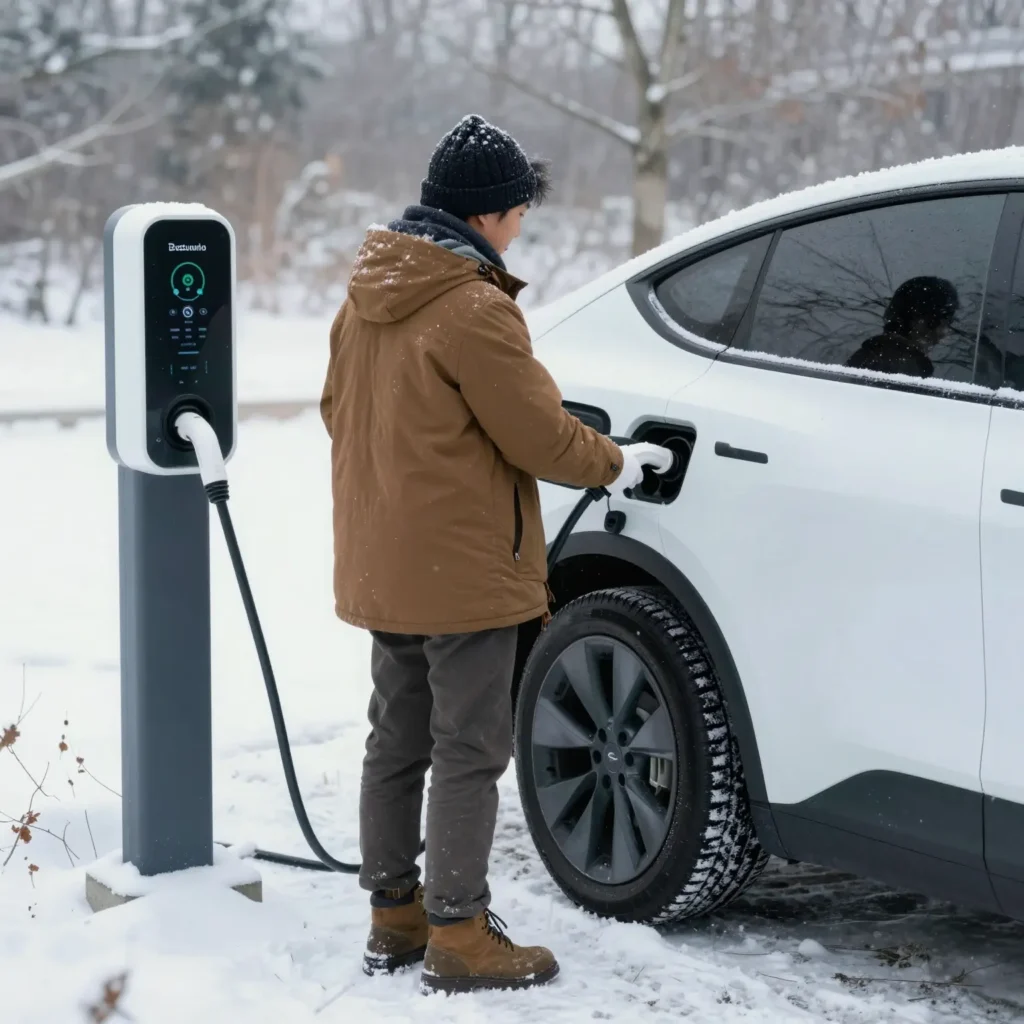
Fast Charging Below Freezing: An Overview
Fast charging below freezing is one of the harder problems in electric vehicle battery management. A lithium-ion pack takes high current without complaint at moderate temperatures. Drop it below 0°C (32°F) and the chemistry inside slows down. A charge that fills the pack in about 20 minutes at room temperature can stretch well past an hour in deep cold, and forcing full power into a cold pack can damage it permanently.
Cold cells resist the movement of lithium ions. That leaves two options, neither of them free: charge slowly and protect the pack, or spend stored energy to warm it first. What follows covers the plating risk that makes cold charging dangerous, then the cost of preheating.
Key Terms in Plain Language
Lithium plating. When a cell charges, lithium ions slide into the layered graphite of the anode, a process called intercalation. If the anode is cold, ions arrive faster than the graphite can absorb them and some turn into metallic lithium that coats the surface. The coating eats into usable capacity, and over time it can become a safety hazard.
Electrode polarization. The voltage gap that opens when ions cannot move through the cell as fast as the charger pushes current. High polarization raises cell voltage, and high voltage is what triggers plating.
Charge acceptance. The maximum current a battery can absorb safely at a given temperature and state of charge. A cold pack has low charge acceptance, which is why DC fast chargers pull their power back in winter.
Preheating energy cost. The stored energy spent warming the pack before a charge begins. Preheating raises charge acceptance, but the energy comes out of the range the driver could have used on the road.
Modern EVs handle winter charging in software: thermal management decides when to preheat, and the charge controller decides how much current to allow. Understanding those two decisions makes it easier to charge quickly without wearing the pack out. They also run inside the vehicle’s onboard control systems, as in this overview of Mercedes EQS battery and charging software.
How Lithium Plating Occurs in Cold Conditions
A lithium-ion cell is designed to shuttle lithium ions between two host structures without ever forming pure metal. On charge, ions leave the cathode, cross the electrolyte, and slot into the layered gaps of the graphite anode. Every step depends on temperature. Below freezing the kinetics slow down, and that slowdown is where plating begins.
The normal path, and why cold breaks it
Intercalation is fast, efficient, and fully reversible. Ions slip between the graphene sheets, the graphite stretches a little to take them, and the process runs smoothly at room temperature. Cold changes three things at once: the electrolyte thickens, the interface chemistry slows, and the anode is pushed harder than it can absorb comfortably.
Slowed lithium-ion diffusion
As temperature falls the electrolyte becomes more viscous and ion mobility drops, so lithium-ion diffusion through the electrolyte slows sharply. Once ions reach a graphite particle, their solid-state diffusion into the bulk of the anode is sluggish as well. They cannot enter the graphite fast enough to match the current the charger is demanding.
Anode polarization climbs
When ions arrive at the anode more slowly than the current requires, the anode potential is driven further negative relative to its equilibrium value. That deepening anode polarization is the warning sign: the lower the potential goes, the closer the anode comes to the point where lithium plates as metal instead of intercalating.
Sluggish charge-transfer kinetics
The hop of an ion across the electrode-electrolyte interface, the charge-transfer step, is thermally activated and slows sharply in the cold. Ions pile up at the surface instead of entering the graphite lattice, which makes the polarization worse.
Metallic lithium deposition on the surface
When polarization pushes the local potential below the threshold for lithium reduction, metallic lithium deposition begins. The ions gain electrons and settle on the anode surface as dendrites and mossy films instead of entering the graphite. It takes a combination of conditions:
- Ions arrive faster than the graphite can absorb them.
- The anode potential near the surface slips below the plating threshold.
- Lithium nucleates as dendritic and granular deposits instead of intercalating.
Why the deposition is largely irreversible
Most of that plated lithium never comes back. Some reacts with the electrolyte to form new solid-electrolyte interphase (SEI) layers, which consumes lithium permanently. Dendrites can lose electrical contact with the anode and become “dead lithium.” These losses are structural, so capacity does not recover when the pack warms up again.
How usable capacity shrinks
Every gram of lithium trapped in SEI or dead deposits can no longer carry charge, so usable capacity drops for good. Repeated cold fast charging accelerates the decay. That is why battery-management systems throttle current and preheat the pack rather than letting it take full power. It is also why a winter charge curve looks slower and gentler than a summer one.
Bottom line: Cold slows the ions, polarization pushes the anode too negative, and metallic lithium plates on the surface. Most of that lithium is lost for good.
What’s Actually Happening Inside the Anode
The diagram shows a simplified cross-section of a graphite anode under two charging conditions.
On the left is the healthy case: lithium ions slot between the graphite layers, a process called intercalation.
On the right is what goes wrong in the cold: instead of slipping between the layers, lithium collects on the surface as a lumpy metallic deposit. That is lithium plating.
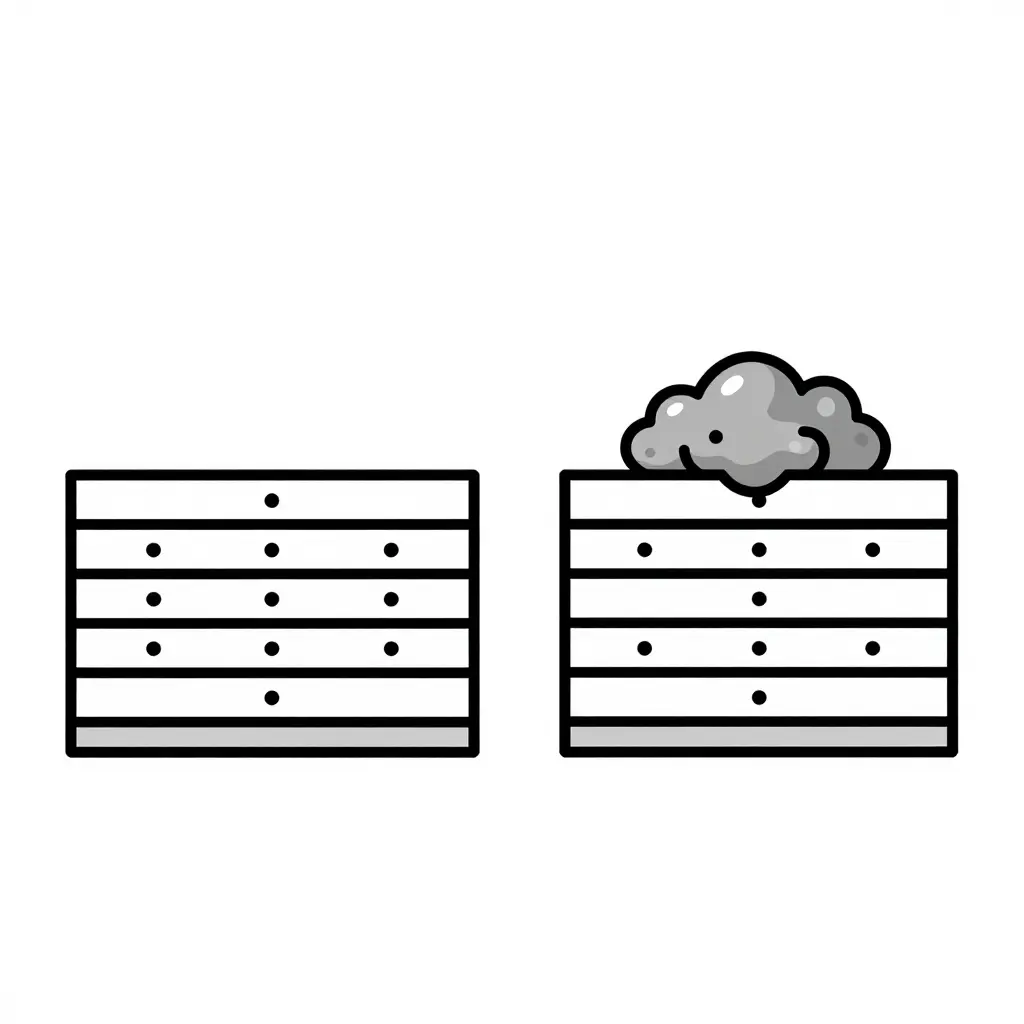
The position matters. Intercalated lithium sits inside the structure; plated lithium sits on top of it. That surface layer reduces usable capacity, and over repeated cold charges it can grow into dendrites that threaten the cell. This is why engineers treat preheating as a trade-off rather than a free win. On the diagnostic side, professional Mercedes diagnostic software solutions can track the performance signatures these deposits leave behind.
Factors That Increase Lithium Plating Risk
Plating happens when lithium ions deposit as metal on the anode surface instead of entering the graphite lattice. It permanently reduces usable capacity and, in the worst case, grows dendrites that can puncture the separator. Managing fast charging risk factors means knowing which conditions push a cell toward plating.
No single variable causes it. Several stressors stack until the anode can no longer absorb lithium fast enough and metal starts building up on the surface:
- Low cell temperature: a cold electrolyte conducts ions slowly and the anode accepts them sluggishly. Cold battery charging is the most common single trigger in real-world use.
- High charge rate: a large current sends ions to the anode faster than they can be intercalated, and the excess deposits as metal.
- High state of charge: the anode is already close to saturated, leaving little room for incoming lithium.
- Repeated fast charging: an occasional quick top-up is usually tolerated, but back-to-back sessions let small imperfections accumulate into measurable capacity loss.
- Electrode aging: as the anode loses active sites, even moderate currents can overwhelm what is left, lowering the plating threshold.
- Little rest before charging: going straight to high current after a cold soak or a hard drive leaves the cell unevenly conditioned and more vulnerable to local plating.
These stressors rarely act alone. A cold pack with an aggressive charge curve and a high starting state of charge can turn a routine fast charge into a real plating event. Battery management systems push back by preheating the pack and tapering current, and tools such as EV battery management software help engineers tune those strategies. The chemistry still rewards gentle treatment whenever temperatures fall, which is the surest way to protect range and safety over the life of the pack.
The Preheating Trade-Off: Energy Cost Versus Battery Protection
Preheating means warming the pack on purpose before it takes high current. In the cold the electrolyte is sluggish and lithium ions move with difficulty, so the pack has to be brought toward a friendlier operating window. Raising cell temperature lowers the risk of plating, which is what erodes capacity and creates safety hazards. Every EV owner eventually runs into the resulting trade-off.
The benefit is measurable: warm cells accept current more efficiently, which lowers the plating risk that makes cold fast charging so hard on long-term health. Manufacturers build preconditioning routines that route energy from the pack or the grid into the thermal management system, usually triggered when a DC fast charger is entered into navigation.
The energy cost is just as real. That energy comes from the same pack that has to move the car, and in severe cold the penalty is significant. A full preconditioning cycle can draw several kilowatt-hours, which translates into tens of kilometres of lost range. Start with a cold battery and request preconditioning, and the range estimate drops before you have left the driveway.
Time is the second cost. Pack heating is not instant, especially at -10°C and below, so a car can sit on the charger for several minutes warming its cells before meaningful current flows. On a long winter trip those minutes add up at every stop.
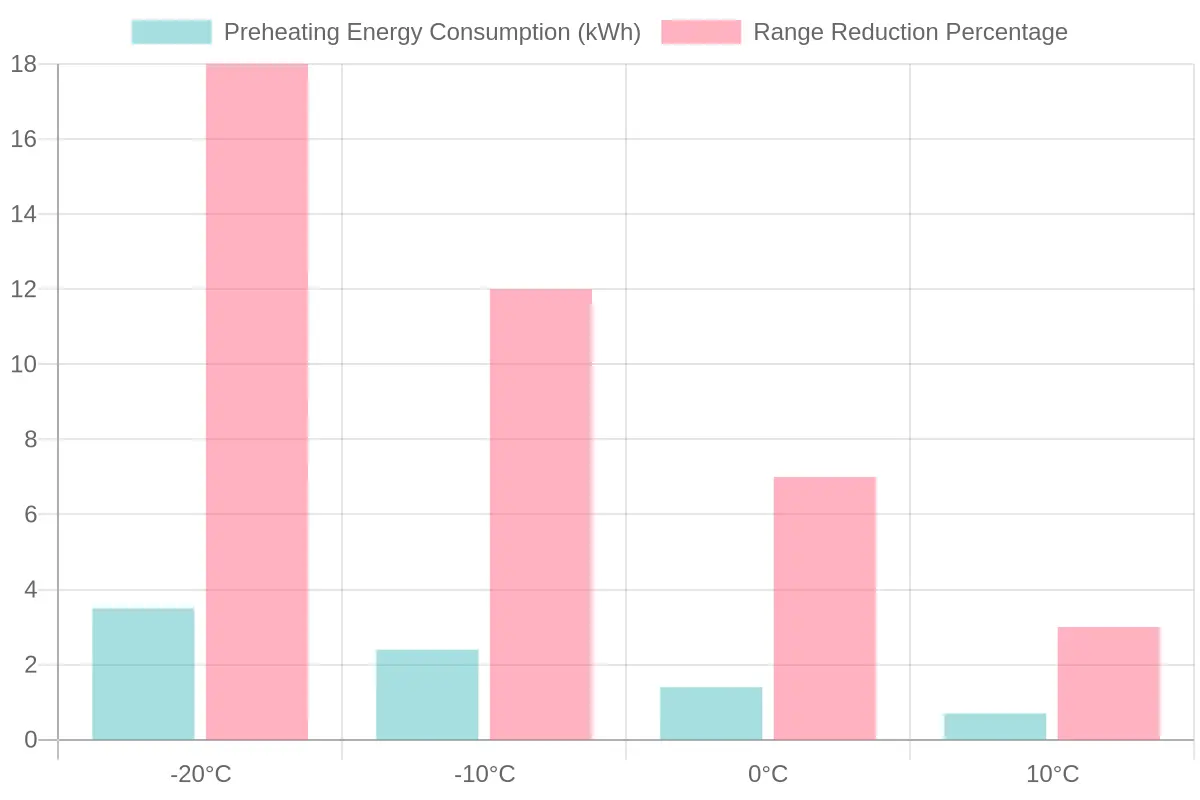
The chart shows how both numbers scale with ambient temperature. As it falls, preheating consumption and the range penalty climb together, which is why the trade-off bites hardest in the coldest months.
The real decision is battery longevity against driver convenience. Aggressive preheating protects the pack and preserves capacity over the years, but it costs range and lengthens stops on exactly the trips where range anxiety is highest. Minimal preheating saves range and time, but exposes the cells to plating that quietly takes capacity. Modern cars resolve this with adaptive logic, using navigation data and outside temperature to precondition only when the benefit is worth the cost. Systems such as the Mercedes EQS software that governs charging profiles blend thermal management with route planning so the driver rarely has to think about it.
Preheating buys lower plating risk with energy and time, and that is the whole bargain. Owners who understand it can precondition before a planned fast charge, skip it for short urban top-ups, and let the vehicle’s thermal logic handle the rest.
Comparing Battery Preheating Strategies
Preheating is one of the more effective ways to suppress plating, but each method pays a different price in energy and time. The options run from dedicated heating hardware to reuse of the drivetrain’s own losses, and each shifts the plating-risk curve differently. Lining them up side by side makes the trade between speed, efficiency, and cell life easier to see.
| Preheating Approach | Mechanism | Relative Energy Cost | Warm-Up Speed | Effect on Plating Risk |
|---|---|---|---|---|
| Onboard resistive heater (PTC) | Dedicated resistive element heats coolant loop or cell surfaces directly | High (approx. 1.0 baseline; drains pack energy) | Moderate (approx. 0.5-1.0 C/min) | Strong reduction; raises bulk cell temp before charge |
| Heat pump | Reverses refrigerant cycle to pump compressor/ambient heat into pack | Low (approx. 0.4-0.6 of baseline) | Slow (approx. 0.2-0.4 C/min) | Moderate reduction; weak below -10 C |
| Motor and inverter heat generation | Deliberately inefficient motor drive converts I²R losses into heat via coolant | Medium (approx. 0.7-0.9 of baseline) | Fast (approx. 1.0-2.0 C/min) | Strong reduction; quick surface warm-up |
| External thermal management (grid/depot) | Off-board heater or preconditioning while plugged in | Near zero onboard (uses grid power) | Slow to moderate | Large reduction; cells start warm |
Table 1: Indicative comparison of battery preheating strategies for sub-freezing fast charging. Energy-cost figures are normalized to an onboard resistive heater as the 1.0 baseline, and warm-up rates vary with pack architecture, coolant-loop design, and ambient temperature.
How Battery Management Software Mitigates Plating
Plating does not strike at random. Three factors have to line up: a cold cell, a high charge current, and a graphite anode that cannot absorb lithium ions fast enough. A battery management system (BMS) exists to keep those three from meeting, through a set of decisions most drivers never notice.
Limiting Charge Current When the Pack Is Cold
Current tapering is the first line of defense. Below roughly 10 degrees Celsius (50 degrees Fahrenheit), the BMS scales back the amps it allows into the pack, often accepting only a fraction of what the charger can deliver. As cell temperature climbs, the permitted current rises along a curve rather than jumping in one step. That is why a car that goes from 20 to 80 percent in half an hour in summer can take much longer on a frosty morning: the software is trading speed for cell health. Engineers calibrate these charge-acceptance maps on the bench, and keeping them current matters. The latest Mercedes EQS software carries thermal and charging logic that reflects the newest protection strategies.
Watching Temperature at the Cell Level
One pack-level temperature reading is not enough. Heat spreads unevenly, so a comfortable average can hide a hot or cold pocket around an individual module. Modern BMS designs sample many sensors and act on the extremes rather than the mean. If any monitored group drifts outside its safe window, the software trims current or pauses charging until conditions improve.
Scheduling Preheat Before Fast Charging
Anticipation does most of the work. When a route includes a DC fast charger, the vehicle can start warming the pack well before arrival. This is not cabin heating; it targets the cells so the charge curve stays steep and plating risk stays low. A pack already at temperature takes full current without the damage a cold one would suffer.
Why Keeping Software Current Matters
These strategies live in firmware, and firmware changes. Tighter limits, better sensor fusion, and refined heating logic arrive with each release. An owner who postpones the Mercedes-Benz software upgrade may be running outdated protection logic without knowing it. The same holds in the workshop: technicians using current engine diagnostic software can catch thermal-management and battery faults before they shorten pack life. Keeping vehicle and diagnostic software up to date remains a cheap, unglamorous way to protect a battery.
Where a Below-Freezing Fast-Charge Session Actually Sends Its Energy
Plug in on a frosty morning and the energy leaving the charger does not all reach the battery. A meaningful slice goes to getting the pack warm enough to accept current safely. The chart breaks a typical cold-weather session into its three main sinks.
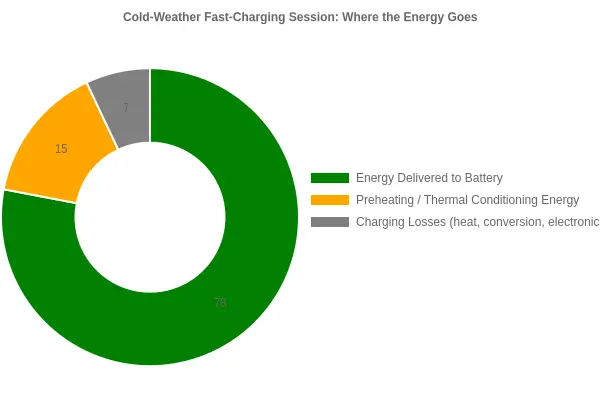
Figure 1 – Energy distribution of a cold-weather fast-charging session. Preheating alone consumes roughly 15% of the session’s energy, the hidden cost of protecting the battery from lithium plating.
Reading the Slice That Costs You
The green mass, about 78%, is what actually reaches and stays in the cells. The small gray wedge, around 7%, is ordinary charging loss: heat in the cables, conversion losses, and the electronics running the session.
The orange wedge is the one to watch. Preheating takes roughly 15% of the session’s energy, about one out of every six or seven kilowatt-hours pulled from the charger. In milder weather the wedge nearly disappears, because the battery is already near its operating temperature. Below freezing, thermal conditioning has to run hard before current can ramp up.
That is the trade-off in one picture. Spend about 15% of the session’s energy warming the pack and you get a faster, more plating-resistant charge. Skip it and you keep the energy now, at the risk of permanent capacity loss from plating later. On thermally managed cars such as the EQS, the vehicle’s own battery and charging software usually makes the call, preconditioning on the way to the charger so the pack arrives warm and the orange slice stays thin.
The orange wedge is not waste. It is insurance paid in electrons rather than battery life.
Practical Guidance for Cold-Weather Fast Charging
Cold mornings are hard on every EV. Below freezing, a lithium-ion pack accepts charge more slowly, and pushing it hard invites plating that permanently takes capacity. A few habits make a winter stop much easier, and they apply to nearly any modern EV, from a commuter hatchback to a flagship sedan.
-
Precondition before you arrive. Preconditioning warms the cells toward an ideal window, often 20-30°C, so they can take high current without stress. If your car supports it, set the fast charger as your navigation destination and the system prepares the pack automatically. On many platforms, such as the Mercedes EQS software ecosystem, it runs quietly while you drive and finishes as you plug in.
-
Take the lower rate when the pack is cold. A charger rated at 150 kW may only be safe at 40-70 kW with a chilled pack. Accepting that protects the cells instead of fighting the chemistry. The number on the pillar is a maximum, not a promise.
-
Charge soon after driving, while the pack is warm. Leftover heat from the trip is free. Stopping within 20-30 minutes of arrival keeps the cells in range; a car that sat overnight in an unheated garage will charge much more slowly.
-
Watch cell temperature, not just state of charge. If your car shows pack temperature, use it. When cells sit near or below 0°C, expect a slow ramp as the battery warms.
-
Avoid back-to-back fast charges in the cold. Repeated DC sessions on a frozen pack add stress and speed up degradation. If you need another top-up, let the pack recover or use slower AC charging.
-
Let the pack rest after a hard drive. After aggressive driving or a long highway run, give it a few minutes to stabilize thermally. A short pause improves acceptance and reduces heat spikes once current flows.
In winter, working with the chemistry pays off. Patience at the plug is worth more than peak charging power.
How the BMS Decides Before It Pushes Current
Before a fast-charge session starts, the BMS runs a check that decides how much power the pack can safely take. The sequence, simplified:
![Simple 2D schematic flow diagram of a battery management system decision sequence. The flow begins in a box for reading cell temperature, moves via a directional arrow into a decision diamond that compares the temperature against a threshold. A “No” branch continues straight ahead to a final box representing normal charging. A “Yes” branch on the cold path drops down into two boxes that represent reducing the charge current and activating preheating, then rejoins a directional arrow leading to a safe-rate charging step. The layout uses clean rounded boxes, a diamond decision node, and straight arrows in blue, grey, and an orange accent on the cold branch, with no text labels.])
Read left to right, the logic is conservative: measure, compare, then act. The decision diamond is where the risk lives. When cell temperature is below the threshold, the pack cannot take full-speed charging, because the sluggish electrolyte makes incoming lithium more likely to deposit as metal than to enter the graphite.
The cold branch is the interesting part. Instead of refusing to charge, the system throttles current to a trickle and switches on preheating so the pack warms toward an efficient window. Once that condition is met, the sequence rejoins the main path and allows a safe rate for the temperature.
The same control logic shows up in every software revision across vehicle platforms, which is why tracking Mercedes-Benz software updates matters as much as the hardware.
FAQ: Fast Charging Below Freezing
What is lithium plating risk during fast charging below freezing?
Below freezing (0°C / 32°F), the electrolyte turns sluggish and lithium ions struggle to enter the graphite anode. Push high current through it, as fast charging does, and those ions deposit as metallic lithium on the anode surface instead. That is plating. It consumes usable lithium permanently, cutting capacity and seeding dendrites that can eventually short a cell.
Does preheating always prevent plating?
No. Preheating lowers the risk but does not remove it. If a pack is warmed only to 5°C while the charger demands 150 kW, plating can still occur. It works best when it brings the anode into a safe window, roughly 20-30°C, and the charging profile is throttled to match. Timing matters as well: a few minutes of warming rarely suffices, because the cell has to be heated evenly, not just warm at the surface.
How cold is too cold for fast charging?
Most automakers disable or heavily restrict DC fast charging at or below 0°C (32°F), and some lock it out near -10°C (14°F). A reasonable rule: do not fast charge a cold-soaked pack at or below freezing without preconditioning. Even between 0-10°C, expect lower rates, because the battery management system caps current to prevent damage.
Does preheating reduce range?
Yes, and that is the trade-off. Preheating draws from the battery itself, so you start with less range; it can consume several kWh. The payoff is a faster, safer session and less long-term degradation. On short winter trips the range you lose may outweigh the charging benefit; on long journeys preconditioning usually wins.
How does plating affect battery lifespan?
Every plated lithium ion is one you can never cycle again, so capacity fades faster. Even small amounts of plating accelerate growth of the solid-electrolyte interphase and raise internal resistance, which cuts both efficiency and available power. Repeated cold fast charges compound the damage, and the pack can end up years shorter-lived than one that was never fast charged in the cold.
Can software reduce cold-weather charging risk?
Yes. Battery management software watches cell temperature, state of charge, and charge current, and limits the rate until conditions are safe. Preconditioning schedules, adaptive charge curves, and thermal-management changes all arrive as software updates. EV-focused Mercedes EQS software, for instance, manages heat pump and battery pre-warming logic that protects the pack. Keeping firmware current is one of the easier ways to lower plating risk.
Do all EVs handle cold fast charging the same way?
No. Chemistry, pack design, coolant loops, and BMS strategies vary widely, so a car that charges comfortably at -5°C may barely accept current at all. Check your specific model’s cold-weather charging guidance before relying on a fast charger in deep winter.
What Research and Industry Data Show
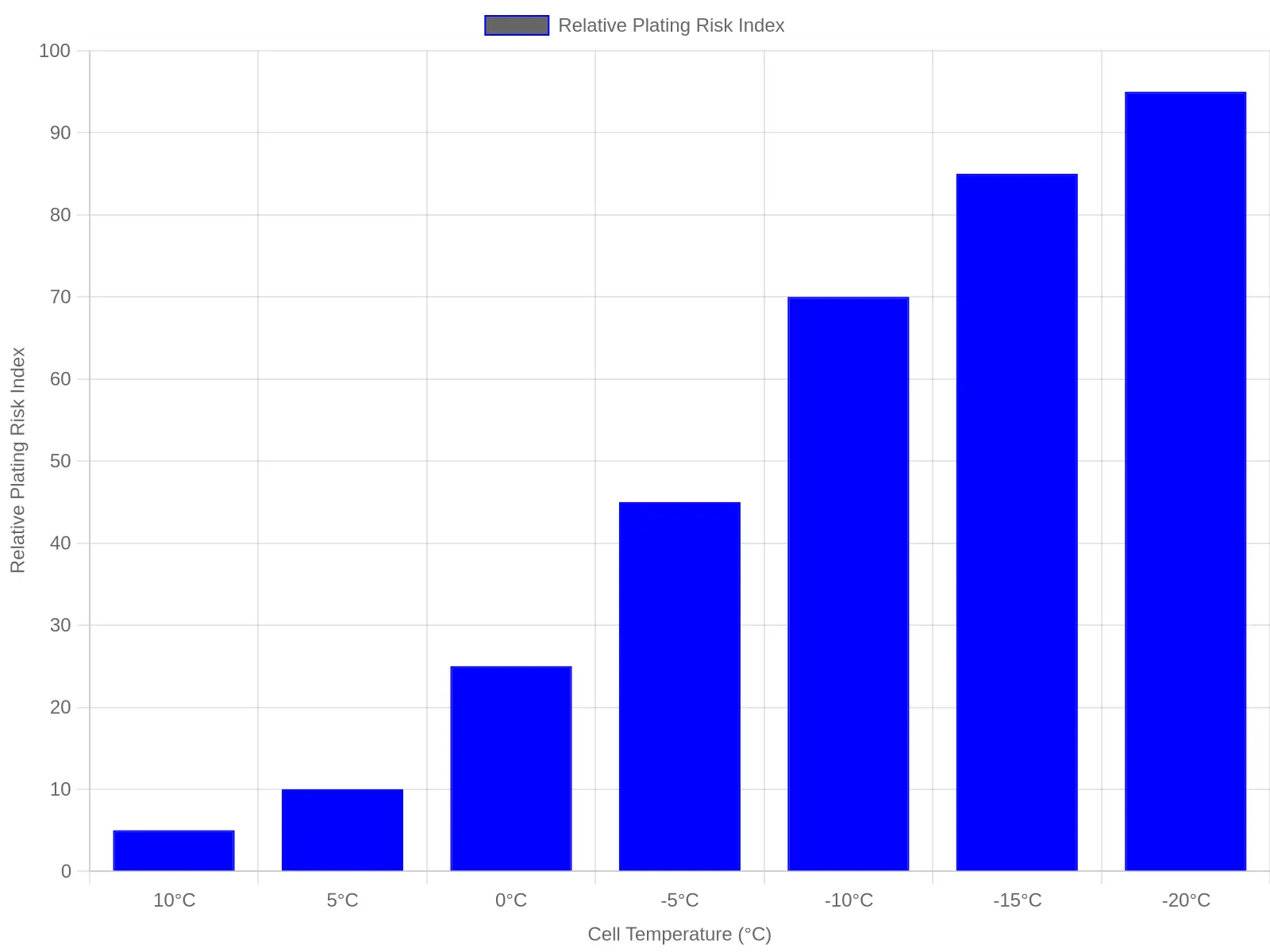
The published work on lithium plating research points one way: plating is not an on/off switch but a gradient that steepens as cell temperature falls. Risk is governed mainly by anode potential and the combination of temperature, charge rate, and state of charge. Above roughly 5°C to 10°C, moderate charging makes plating a marginal concern. Toward 0°C the margin narrows, and below freezing it climbs steeply.
The thresholds that show up repeatedly:
- Near 0°C: plating becomes measurable at elevated charge rates, even though gentler charging remains tolerable.
- -10°C to -20°C: the probability and severity of plating rise sharply, and sustained high-rate charging in this band is treated as a primary degradation pathway.
- Rate interaction: low temperature and high current compound, so a rate that is safe when mild can be aggressive when cold.
That is why cold fast charging is treated cautiously. The amount of plated lithium scales with how cold the cell is and how fast energy goes in, and plating that initially reverses can become permanent capacity loss over repeated cycles.
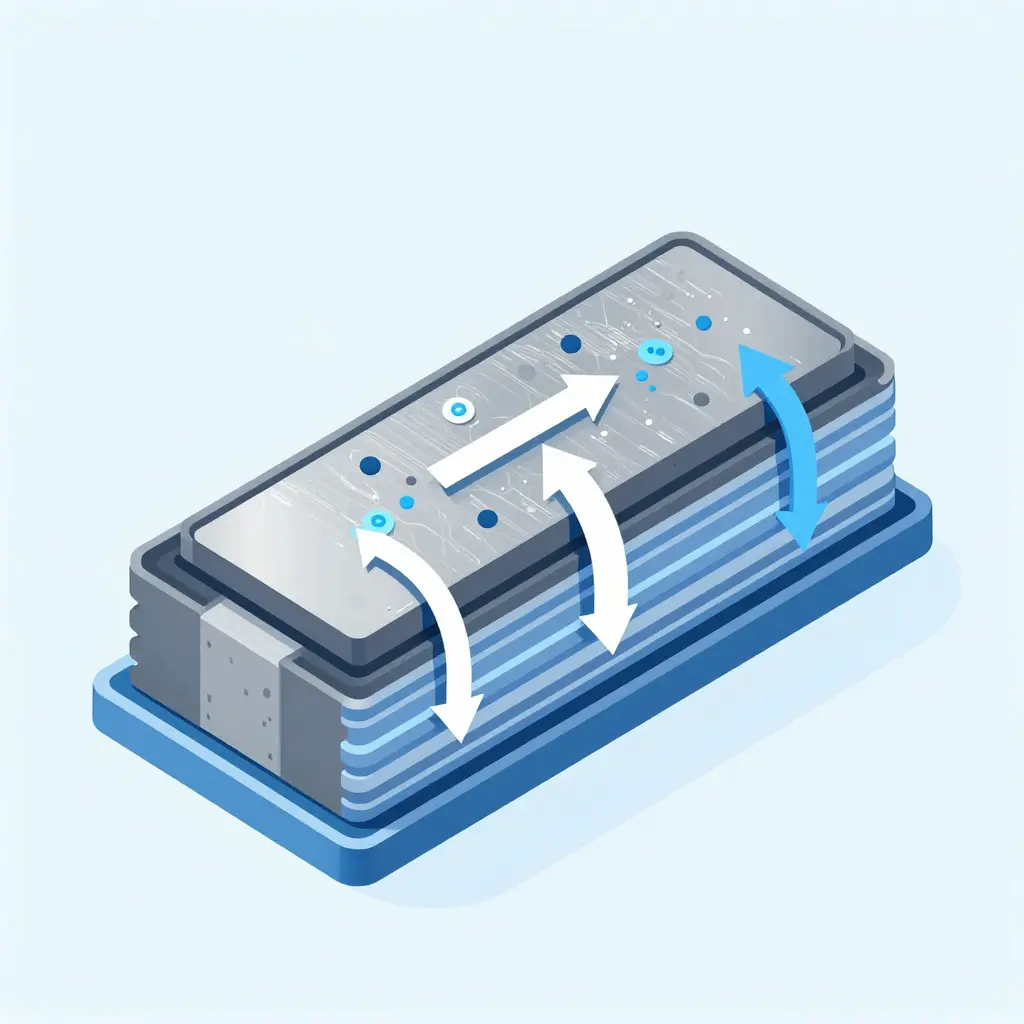
Preheating has a similarly consistent record. Warming a pack before charging raises charge acceptance and shortens the effective charge time at a given current, reduces or removes plating signatures in post-test cell analysis, and improves round-trip efficiency while retaining more usable capacity. Battery management software encodes these thresholds directly, and how a given car balances preheating against charge speed comes down to its calibration, such as the strategies behind Mercedes-EQS software.
The overall finding is a trade-off, not a free lunch. Preheating spends energy and time upfront and buys back safety margin and pack health. The principle holds across chemistries: warm cells tolerate fast charging, cold ones do not.
Key Takeaways
Cold cells change the physics of charging. Near or below 0°C, the anode accepts lithium ions slowly, so during a high-power session those ions tend to plate onto the graphite surface rather than enter it. Plating takes usable capacity, speeds aging, and can seed dendrites that threaten safety. Warming the pack first is the most reliable way to keep ions where they belong.
Warmth has a price. Every kilowatt-hour spent preheating is one that never reaches the wheels, and in deep cold the draw is substantial. Heat too little and you invite plating; heat too much and you give up efficiency and range. The middle ground is adaptive thermal management: navigation and charging-station data decide when a fast session is genuinely imminent, and how much heat is worth it. That logic increasingly lives in the vehicle’s control systems, such as the software that governs EV thermal strategies.
There is no universal “right” temperature, only a balance. The practical points:
- Cold cells sharply raise plating risk during high-power charging; preheating is the main defense.
- Preheating uses real energy and cuts efficiency, especially in extreme cold, so weigh it against range loss.
- Adaptive thermal management limits both plating risk and wasted energy by heating only when it matters.
- The best strategy matches heat to the actual driving and charging plan instead of warming the pack “just in case.”
That balance, measured and mostly automatic, is what separates a pack that lasts for years from one that fades a little every winter.